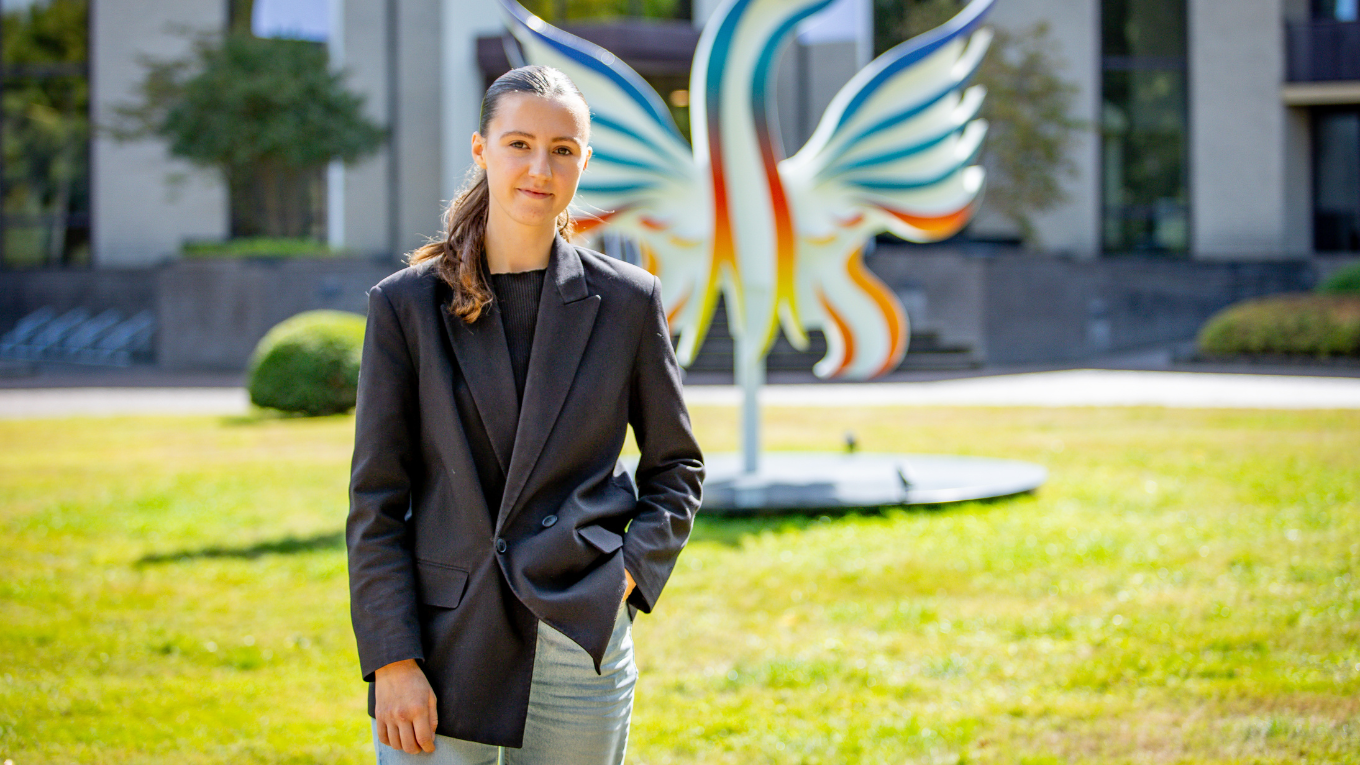
How did you experience your treatment at Yes We Can Clinics? We asked former fellow Noor.
What did your life look like before Yes We Can?
"I was constantly focused on my weight, my eating habits, and hurting myself. I lived from one crisis to the next, stopped going to school in my third year of secondary school, and had lost all joy in life. It got to the point where I only wanted to die."
When did you realise things couldn’t go on like this?
"No treatment seemed to work, and I couldn't stop my destructive behaviour. I only did it more and more, hoping it would finally give me the sense of relief I was looking for – but it never did. I was only pushing myself closer to death. At that moment it felt like: either I keep going like this and I'll die, or I truly give this one last chance. That was my turning point."
What has Yes We Can meant to you?
"Everything. I can enjoy everything around me, but most of all myself. I can look in the mirror and truly feel proud of the person I see. I've been able to rebuild my life without addiction and achieve so much because of that – things I could never have dreamed of before."
What had the biggest impact on you during treatment?
"The 'no-send' letter I wrote together with my therapist in the auditorium to my sister, who had passed away eight years before I came to the clinic. It gave her a permanent place in my heart. In the years before Yes We Can, I refused to talk about her, look at photos, or really allow myself to feel anything. That moment still has an impact on me to this day."
What was your favorite place at Yes We Can?
"The auditorium. Not because it's such a beautiful place, but because almost all of my most meaningful moments happened there."
What did the youth coaches mean to you?
"Whether it was talking in the evening because I couldn't sleep, speaking up about something or just having a laugh – they were always there for me. They really felt like big brothers and sisters."
What did the counsellors mean to you?
"Being confronted with myself was exactly what I needed. The counsellors could see straight through me at times when I didn't even realise how much my behaviour was affecting me."
What did the therapists mean to you?
"I recognised so much of myself in my therapist that it was very confronting at first. But it also made me feel incredibly heard and understood."
What does your life in recovery look like now?
"I have just started university, I regularly attend meetings, help others in their recovery, and most importantly, I stay true to myself – because I never want to lose that again."
Who or what motivates you to stay in recovery?
"At the moment I spend quite a lot of time helping others in their recovery. Seeing how my story inspires others is often a real moment of pride for me. It reminds me that staying in recovery is more than worth it. I also like to think that my sister up there has someone to be proud of."
Seeking for help? We are here for you
Please know you are never alone. Our team members are here to listen and to help. Call us on +31 (0)85 020 1222.
Contact us