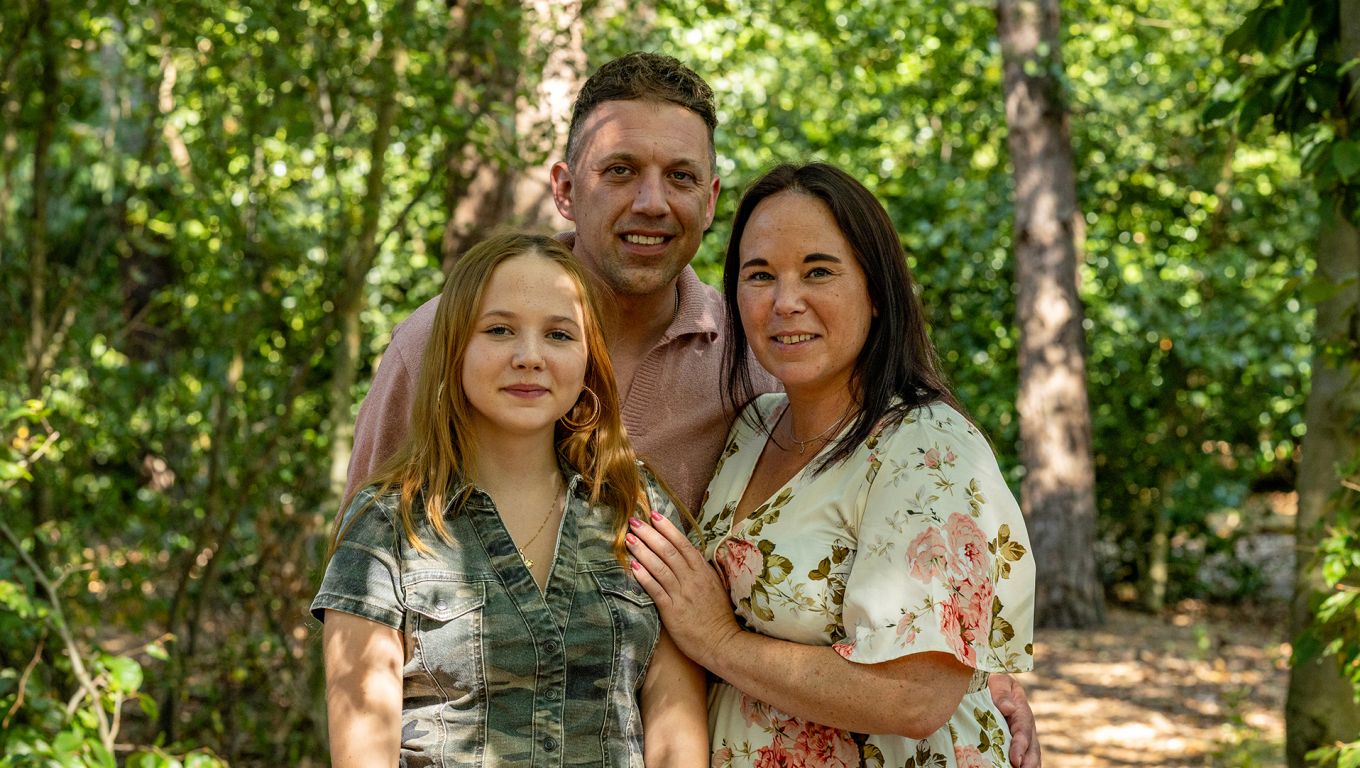
Kyra had been receiving support from a young age, but she continued to struggle. She was experiencing depression, and tensions at home were rising. Previous support had not yet given her what she needed. Going to the clinic felt daunting, but once there, she discovered that she could talk about what was on her mind. While Kyra worked on herself, her parents did the same.
Taking the first step together
Before going to Yes We Can Clinics, Kyra had already received various forms of support. She had been through a lot. Her mother explains that Kyra was emotionally exhausted and struggling with depression. At the time, her parents chose their words carefully.
“You don’t want to make her even sadder or hurt her even more,” her mother says.
At home, her mother was used to sorting out a lot of things for her children. “Mum did everything, Mum sorted everything out,” says Kyra. Her mother explains that she was trying to make up for what their biological father did not give them. When, with support, she tried to become more consistent, things changed for Kyra too. Kyra found this difficult and, according to her mother, it led to more anger.
Her stepfather, whom Kyra calls her dad, saw how emotions and arguments could escalate and then subside. The calm periods in between did not ease his concerns. “You were always left wondering: when will it happen again?” He wanted to understand where it was coming from and how they could move forward together.
Ewout Genemans’ documentary about Yes We Can Clinics on Videoland gave him confidence. He saw an approach that addressed precisely those questions: “Where is this coming from, and how do we deal with it?” Kyra also recognised herself in the young people featured.
“I recognised things in so many different young people and thought: I’m like that too. Or that happens at home for me too.”
After talking it through together, they decided to take the step.
A daunting start
Kyra wanted help, but going to the clinic felt daunting. By her own account, she was on her best behaviour between the intake assessment and the start of treatment, hoping she would no longer have to go. Once she reached the bus, all she wanted was to go home.
She also found the first few days at the clinic difficult. “I was scared to look at myself in the mirror. And to think about all the things I was doing.” Conversations with the coaches helped her open up.
“Here, I’m allowed to be who I am. And I’m allowed to talk about things I find difficult.”
She also realised that she needed to work on how she responded to situations and dealt with things.
Space to talk and learn
During treatment, the counsellors, coaches and her therapist played an important role for Kyra. In individual conversations and group sessions, she reflected on what she felt and how she dealt with those feelings. She sometimes found the conversations with the counsellors tough. Looking back, she says she feels they helped her.
The confrontation letter also had a strong impact on her. She began to understand better how her reactions affected others. “I felt hurt by everything that had happened,” she explains. Previously, she had given less thought to how, acting from that hurt, she could hurt others too. During treatment, she learnt to see this differently.
Kyra was really pleased that her parents were also taking part in a parents’ programme. With previous support, she had often felt that she was the only one who had to change. Now, she could see that her parents were also reflecting on their own reactions and gaining a better understanding of what she was learning. “It felt like I wasn’t doing it alone.”
Working towards recovery together
For her parents, it took time to get used to not seeing Kyra for a while. The first few weeks without her were particularly hard for her mother. She fully supported the treatment, but she also had doubts.
“Am I doing the right thing? Am I a good mother? And am I putting her through something terrible?”
On the family connection day, after five weeks, she saw how enthusiastically Kyra spoke about what she was doing and showed her what she had been working on. Her fear that Kyra would feel alone gave way to relief. “I left the clinic feeling so relieved.”
During the parents’ programme, her parents had open conversations with members of the Yes We Can Clinics team and other parents. They recognised their own concerns in those of others and gained insight into their own behaviour. They also gained a clear understanding of the programme and what to expect.
Her dad explains that, with previous support, they had often felt they were not very involved. There would be an occasional review meeting, when what they really wanted was to move forward together with Kyra.
“Everyone wants to work with Kyra, but it’s about more than just Kyra. It’s about our family.”
At Yes We Can Clinics, they felt heard. While Kyra worked on herself, her parents learnt how they could support her and what they could change themselves. “We needed to find that connection with each other. And it was only here that we really managed to do that,” her dad says.
Putting what you have learnt into practice at home
By the end of her treatment, Kyra no longer wanted to leave. She even asked whether she could stay longer. After ten weeks, it was lovely to see her family and friends again, but the first few days at home were difficult. “I actually started clashing with my brother again very quickly,” Kyra says. They both needed time to get used to being at home together again.
The arguments alarmed her mother. She was afraid they were back to square one and noticed that she, too, was falling back into old patterns of reacting. Her dad saw how strongly Kyra was still holding on to the way things were done at the clinic. Together, they had to work out how to put what they had learnt into practice at home.
Being in touch with another fellow helped. It was reassuring to hear that others were also finding it difficult to be back home. As everyone found their place at home again, things gradually improved.
There is now more calm at home. Her parents notice that they, too, respond differently and that this makes a difference within the family. If a conversation gets stuck, they turn to the folder from treatment to help them give each other feedback respectfully.
Kyra is back at school, has a part-time job and spends time with friends. After days with a lot to take in, she is often tired and takes time to rest. Despite the schoolwork she had to catch up on, she passed the year with good grades. She looks back with pride on the step she took. “I am proud of myself for doing this.”